
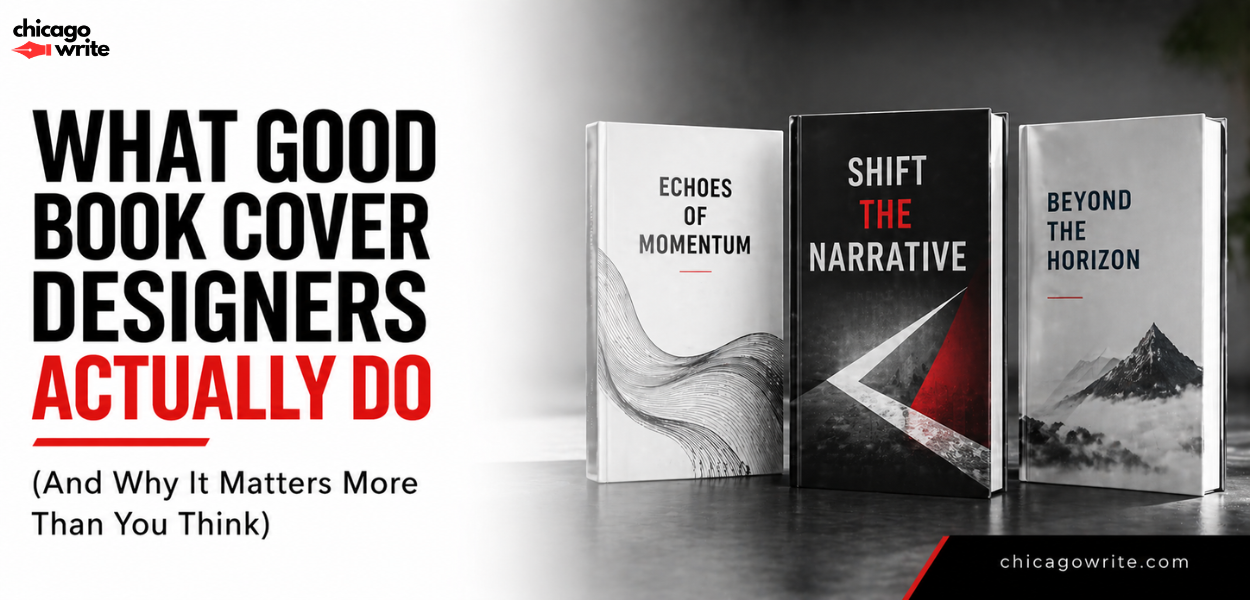
Most authors spend months writing their book and about 20 minutes thinking about the cover. That tends to be a problem.
Walk into any bookstore or scroll through Amazon for five minutes and you will notice something: the books that stop you mid-scroll have one thing in common. The cover does its job before you ever read a word. Professional book cover designers understand this. Their job is not to make something pretty. It is to make something that sells.
If you are trying to figure out what to look for when hiring book cover designers, or why your last cover just did not feel right, this is for you.

A Book Cover Is Marketing, Not Decoration
Here is something most people do not hear enough your book cover is not about you. It is about your reader.
When someone lands on your book listing, they are making a snap decision. They are asking themselves whether this book belongs in the same category as others they have loved and trusted book cover designers who are good at their job understand genre conventions inside and out. A thriller cover looks nothing like a self-help cover. A memoir has its own visual language. Step outside those conventions and readers sense something is off, even if they cannot say exactly why.
That said, a great cover does not just blend in. The best book cover designers know how to make a cover feel familiar enough to signal the right genre while still standing out on a page full of competitors.
- The difference between a cover that feels homemade and one that feels professional usually comes down to typography, not just the image. Most DIY covers get caught on this exact detail.
What Separates Good Book Cover Designers from Average Ones
There is no shortage of people offering cover design services online. Fiverr has thousands of them. But the range in quality is enormous, and not always obvious from a portfolio at first glance.
Here is what actually separates strong book cover designers from the rest:
- They ask about your audience before they open a design file. A designer who jumps straight to visuals without understanding who is buying your book is guessing.
- They know typography. This is where most cheap covers fall apart. Font choice, hierarchy, spacing and how the title reads at thumbnail size all make or break a cover.
- They design for Amazon thumbnail size, not just print. Your cover will be seen at roughly 100 pixels wide on most devices. If it does not read at that size, it does not work.
- They understand print specs. Bleed, spine width, barcode placement, resolution. A cover designed only for digital will cause headaches the moment you go to print.
- They push back when needed. If your idea will not work visually, a good designer tells you. A yes-person who executes whatever you ask rarely produces the best result.
Experience in your specific genre matters too. A designer who specialises in business books might not be the right fit for a fantasy novel, and vice versa.
How Chicago Write Approaches Book Cover Design
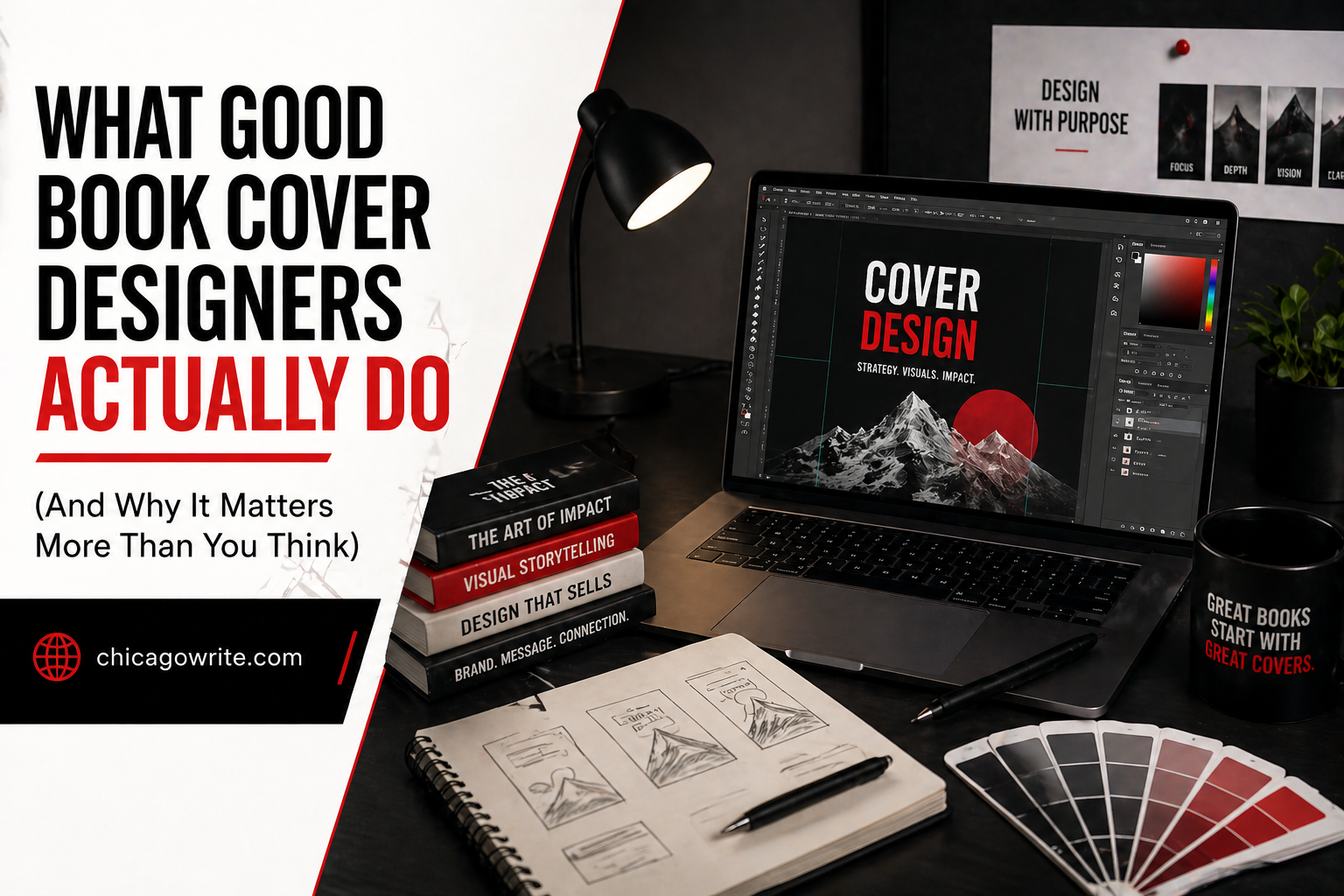
At Chicago Write, cover design is not a bolt-on service. It is part of how we think about the book from day one. Before our designers touch a single asset, we go through your positioning. Who is reading this book? Where will they find it? What other books are sitting on that same Amazon page? Those answers shape every creative decision, from the color palette to the font weight to whether the author photo belongs on the front or back.
We design both print and digital versions at the same time, so nothing gets lost in translation when your paperback goes to Amazon or IngramSpark. And we go back and forth with you until the cover feels right, not just acceptable.
Authors who have worked with us have gone on to hit bestseller categories on Amazon. A strong cover is rarely the only reason, but it is almost always part of it.
The Most Common Book Cover Mistakes Authors Make
Most cover problems come from the same few places. Worth knowing before you hire anyone.
- Using a free tool like Canva without design experience. The templates are built for social media, not books, and they tend to look exactly like what they are.
- Hiring based on price alone. A 30-dollar cover usually looks like a 30-dollar cover. If your book is going to sit next to traditionally published titles, it needs to compete visually.
- Overloading the cover with information. Your name, your title and a compelling image are usually enough. Subtitles, taglines and endorsements belong on the back.
- Picking a font because you like it, not because it fits the genre. Script fonts on a business book. Serif fonts on a young adult thriller. These mismatches quietly signal to readers that something is off.
- Not testing it at thumbnail size. Print your cover out at one inch tall. If you cannot read the title, neither can the person scrolling Amazon.
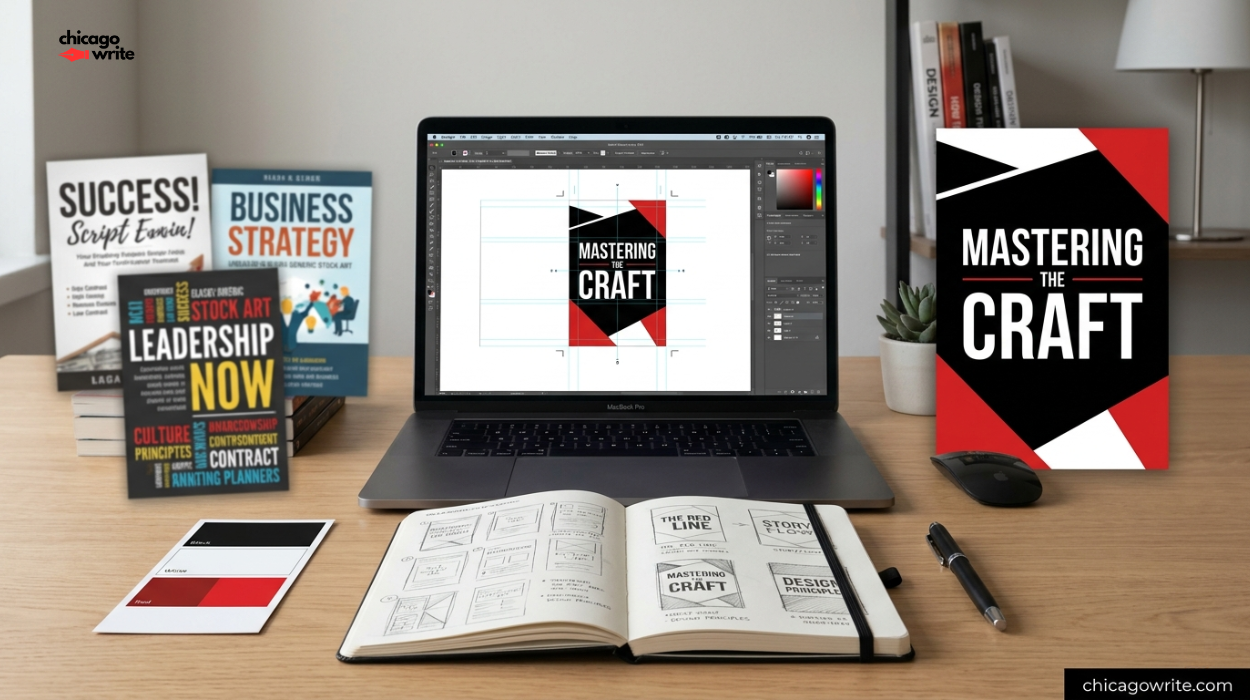
- We have had authors come to us with a manuscript ready to go and a cover they made themselves. Nine times out of ten, the cover is the thing holding the book back before it even launches.
Frequently Asked Questions About Book Cover Designers
How much do professional book cover designers typically charge?
It varies quite a bit depending on experience and what is included. Freelancers on platforms like Reedsy generally charge between $300 and $1,500 for a single cover. Full-service publishers like Chicago Write include cover design as part of a broader publishing package, which tends to be more cost-effective if you also need editing, formatting, and publishing support.
What should I send to a book cover designer before we start?
The more context the better. Share your manuscript or a detailed synopsis, the genre, comparable books you like the look of, any specific images or concepts you have in mind, and your author bio if it is relevant to the brand you are building. The clearer you are upfront, the fewer revision rounds you will need.
How many revisions should I expect from book cover designers?
Most professional book cover designers offer between two and four revision rounds. Chicago Write works with authors until the cover is right, without putting an arbitrary cap on the process.
Do book cover designers handle both print and ebook versions?
They should, but always confirm this upfront. Print requires a full wraparound design with spine and back cover, plus the correct resolution and bleed settings. Ebook needs a front cover formatted correctly for digital storefronts. These are different files with different specs.
Can I use my own image or photograph for the cover?
Yes, and many authors do. Just make sure you have the commercial licensing rights to any image you supply. Stock photos from free sites often do not carry commercial rights, which can become a problem once the book is published and generating sales.
What if I hate the first design I see?
That is normal and a good designer will not take it personally. The first concept is a starting point, not a final answer. Give specific feedback rather than general impressions. Tell the designer what is not working and why, and the next round will be much closer.
Ready to Get a Cover That Does Its Job?
Your book deserves a cover that earns its place on the shelf. Whether you are publishing a business book, a memoir, a novel, or a nonfiction title, the right cover changes how readers see it before they read a single word Chicago Write has designed covers for authors across every genre. We know what works on Amazon, what works in print, and how to build a cover around your book’s positioning rather than just your personal taste.
Get Your Book Cover Quote Today. Call (224) 350-7140 or Visit chicagowrite.com